


This post is late going out, because I wanted to move to a more graphical format, and building everything took longer than expected. The boards carry the numbers now, so the writing doesn’t have to. Everything below is as of Friday’s close (ending July 17).
SPY Chart
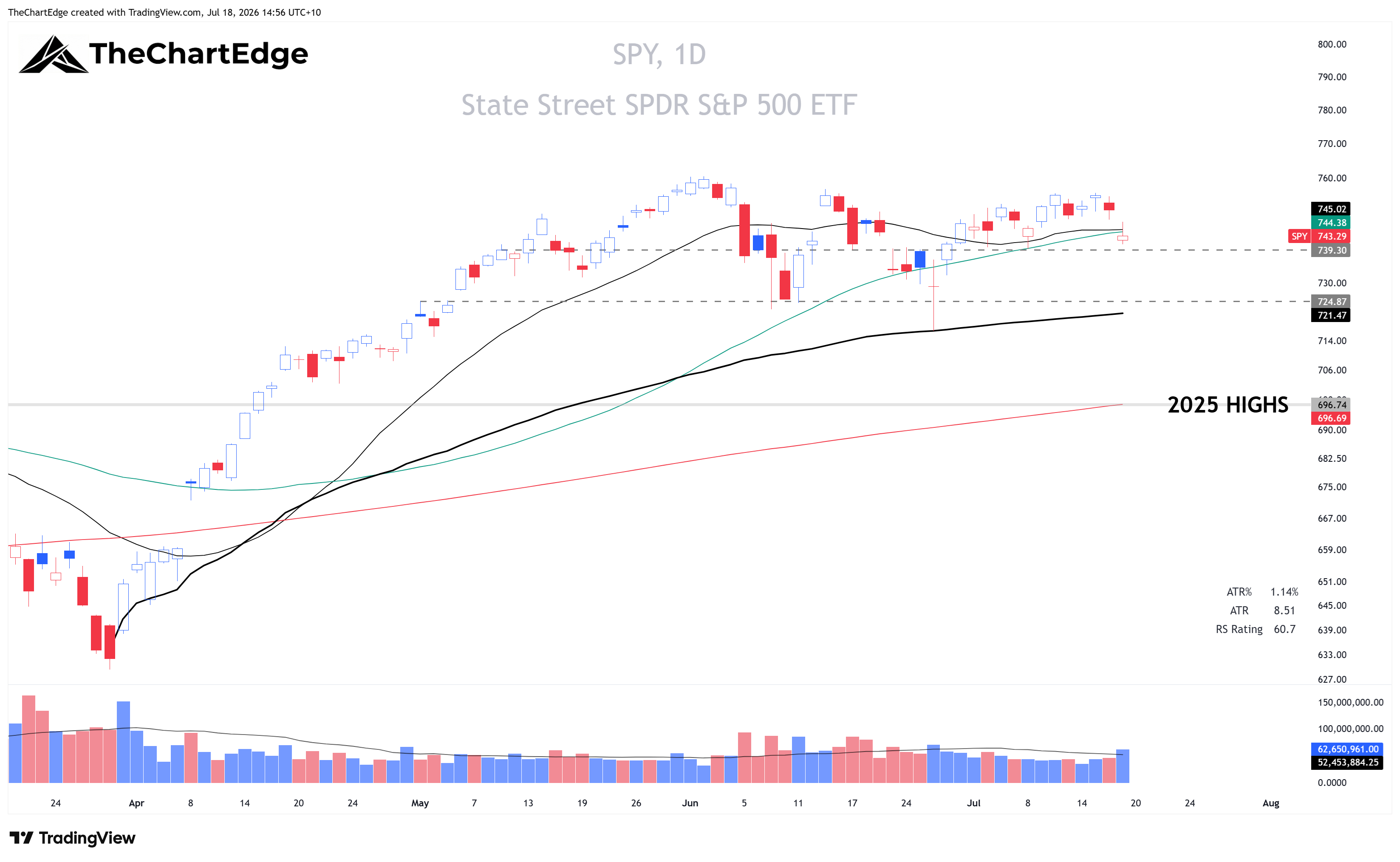
For all daily charts the black line is the 20-day SMA, the green is the 50-day, and the red is the 200-day. The thick black line is the AVWAP from the March 30 low.
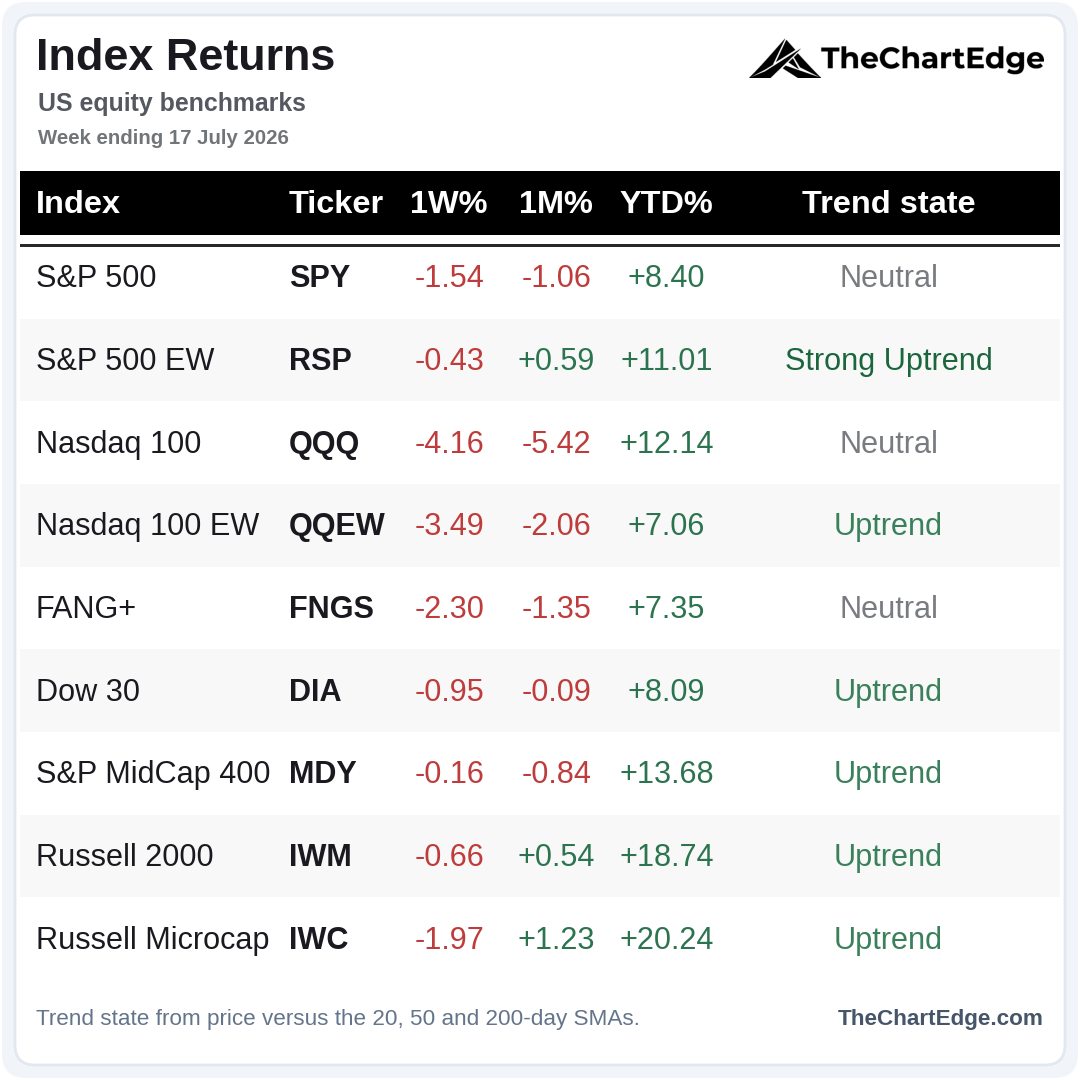
SPY closed the week below its 20 and 50-day SMAs, dropping its trend state to Neutral. If it breaks down below Friday’s low and 739, I wouldn’t be surprised to see a test of the 725 area, which would also line up at or near the rising AVWAP which currently sits around 721.5, and will continue rising over the coming days and weeks.
QQQ Chart
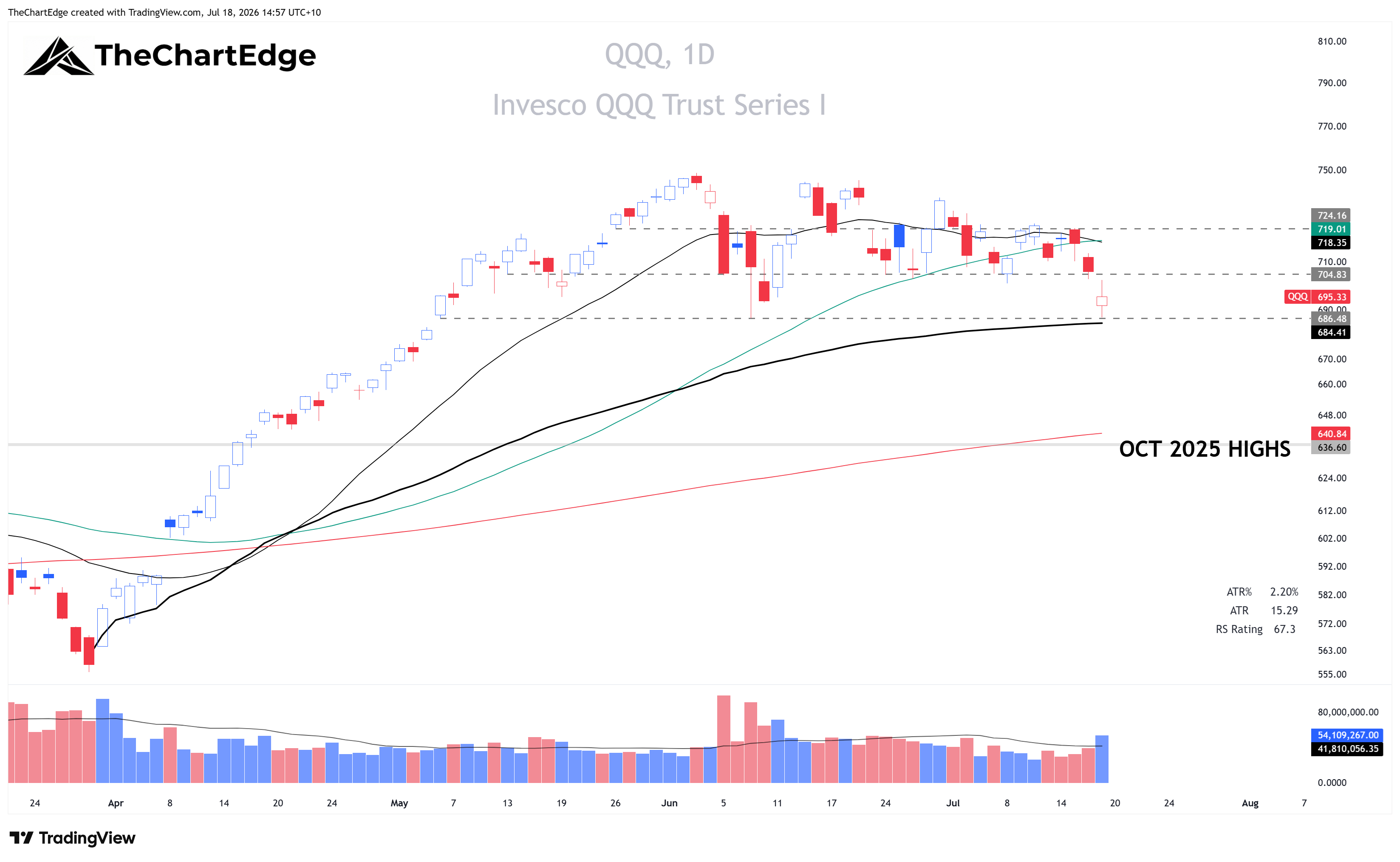
QQQ looks significantly weaker than SPY. It closed about 3% below its 20 and 50-day SMAs and only slightly above the AVWAP from the March 30 low. Bulls want to see this level hold. A significant break below this AVWAP could see a test of the 200-day SMA, which currently sits at around 641 and rising. I’m not predicting that will happen, but the AVWAP sits only around 6.5% above the 200-day SMA, and the rally off the March 30 low was fast and furious, so a fast retracement is a genuine possibility to be aware of.
Market Temperature
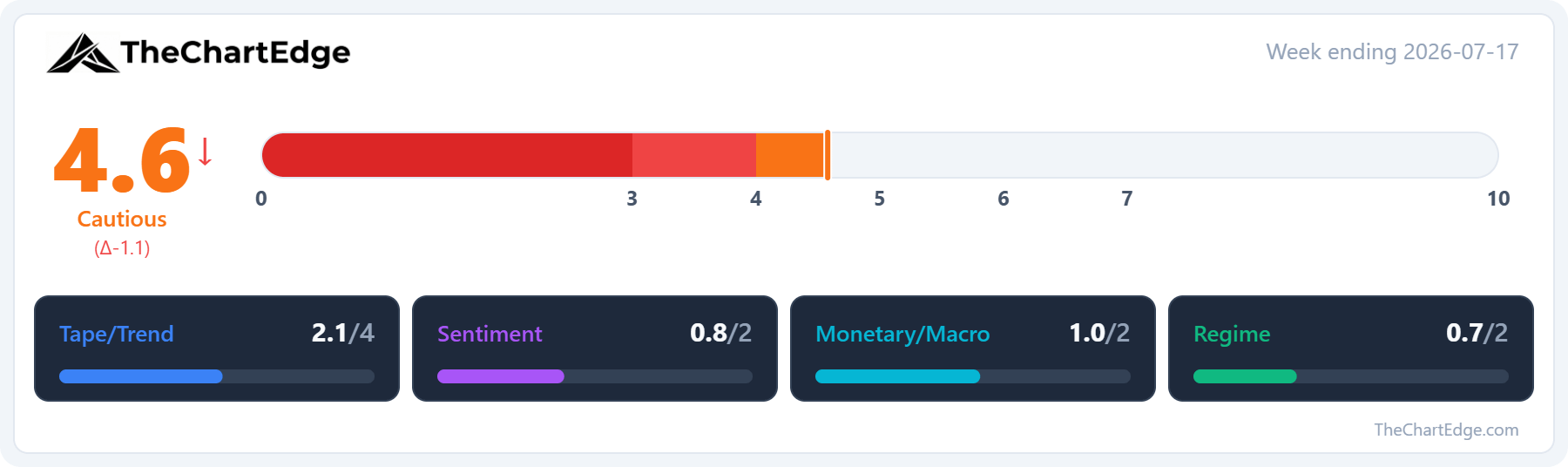
The Market Temperature fell to 4.6 from 5.7, dropping out of the Goldilocks Zone and into Cautious for the second time in four weeks.
The Tape/Trend pillar did most of the damage. Both the S&P 500 and the Nasdaq 100 dropped from Strong Uptrends to Neutral. The S&P 500’s weekly RSI eased to 60.2 from 65.1, and breadth softened - 56.8% of US stocks above their 50-day moving average, from 58.4%, and 57.3% above their 200-day, from 57.9%.
The Regime pillar also weakened. The discretionary vs staples ratio (XLY/XLP) continued lower, and high beta vs low volatility flipped from risk-on to neutral. Growth vs value still scores in value’s favour.
The VIX rose to 18.8 from 15.0, which the model reads as a contrarian positive, and the Monetary/Macro score was unchanged to one decimal place.
GICS Sector Relative Strength
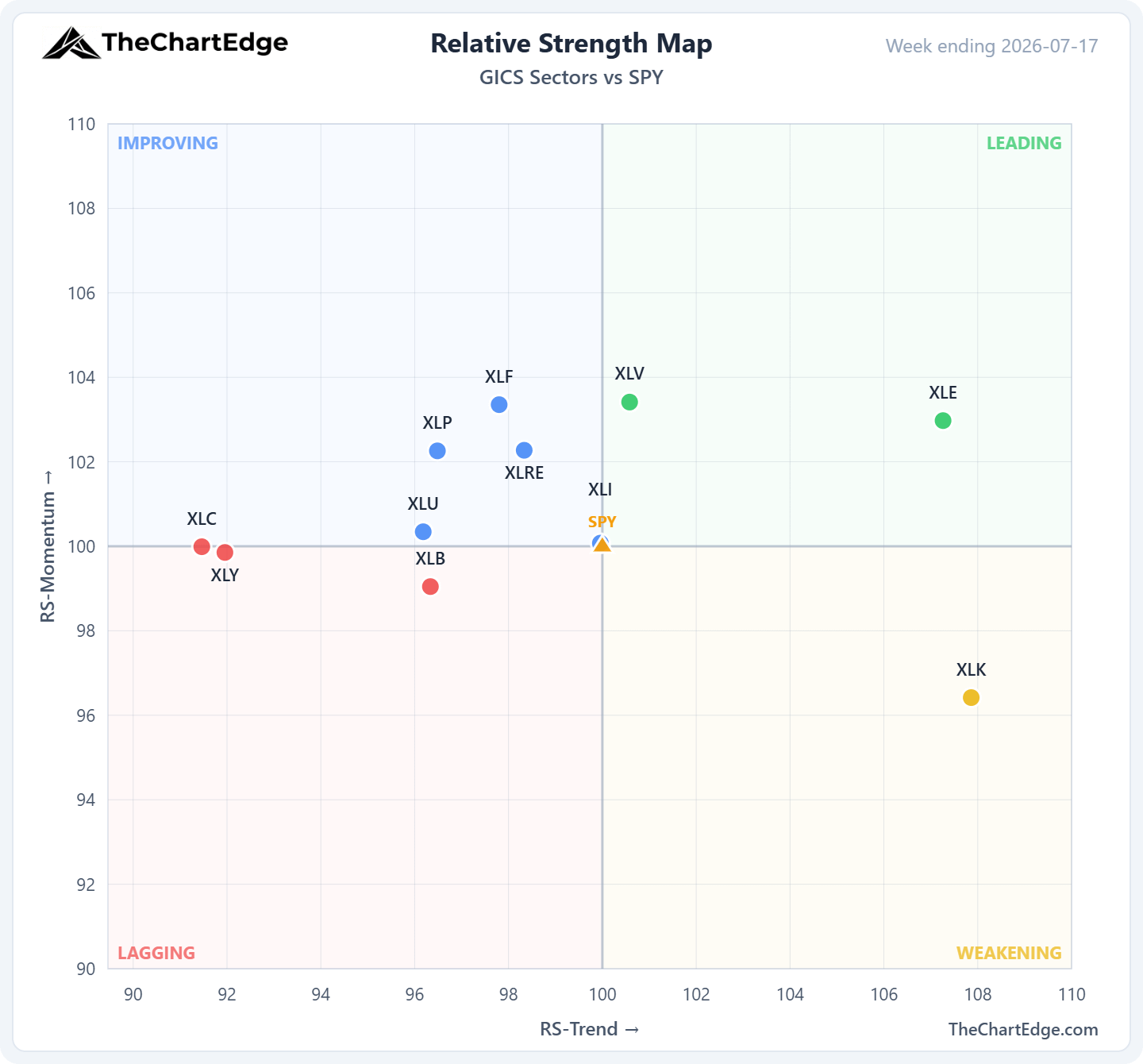
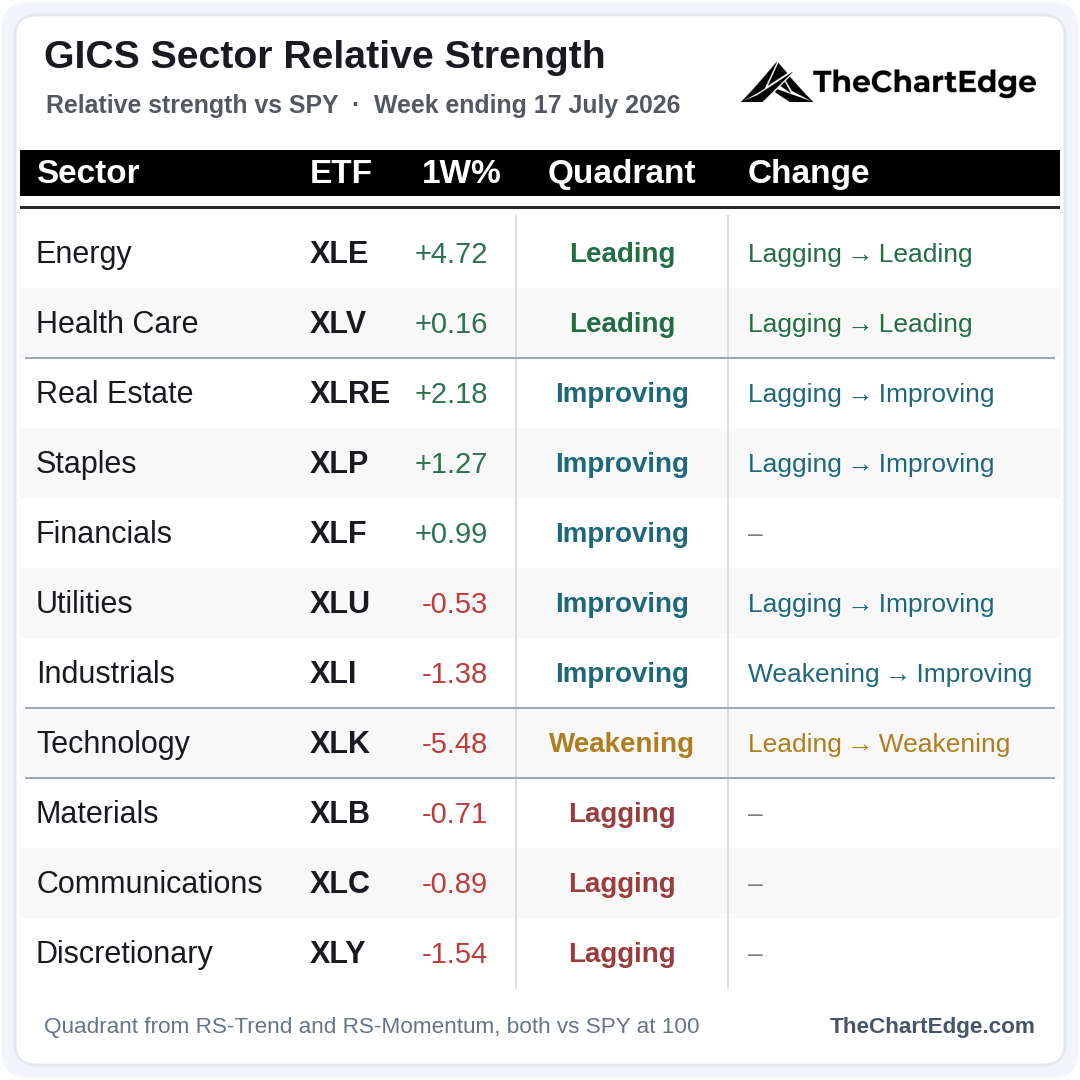
The Change column shows the shift from the prior week's quadrant.
Momentum Leaderboard
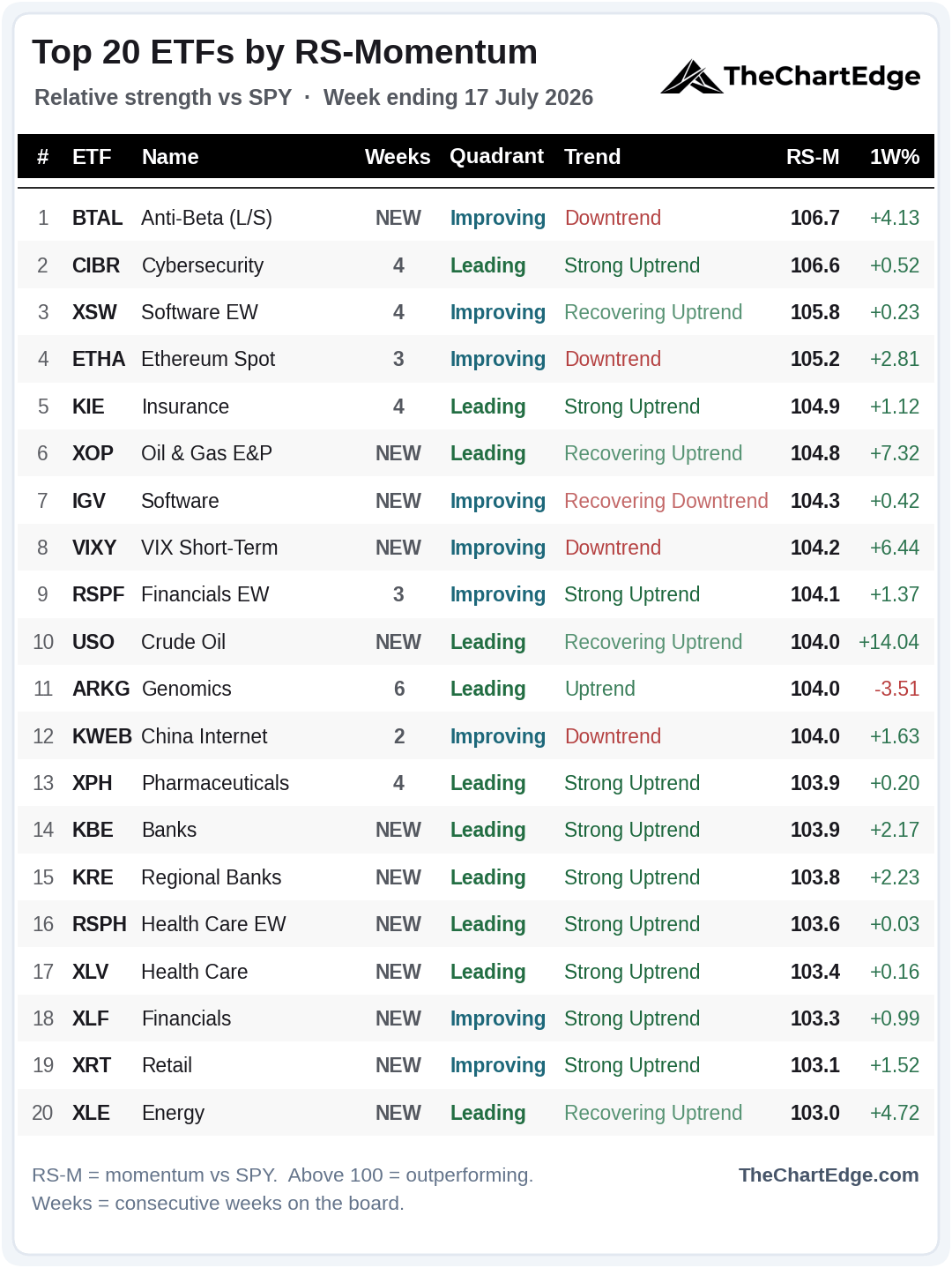
Twelve of the twenty names are new this weekend - the energy complex, the banks, healthcare and retail arriving, while the tech and AI cohort that rejoined last weekend dropped off after a single week, along with Bitcoin and the biotechs.
The new Weeks column shows how long each name has held its place. Genomics (ARKG) is the only one that’s been on every board since I started publishing it six weeks ago, with Cybersecurity (CIBR), equal-weight software (XSW), Insurance (KIE) and Pharmaceuticals (XPH) at four straight weeks.
Two notable things worth pointing out are Anti-Beta (BTAL) at #1 on the board - a fund that shorts high beta. But BTAL is still just a bounce in a massive downtrend, and the same goes for VIX short-term futures (VIXY), whose RS-Momentum jump was the largest of any ETF I track - it’s a product that bleeds value over time through futures roll costs. I would not trade either of these products, but their appearance on the leaderboard is interesting.
Trend States Across the Universe
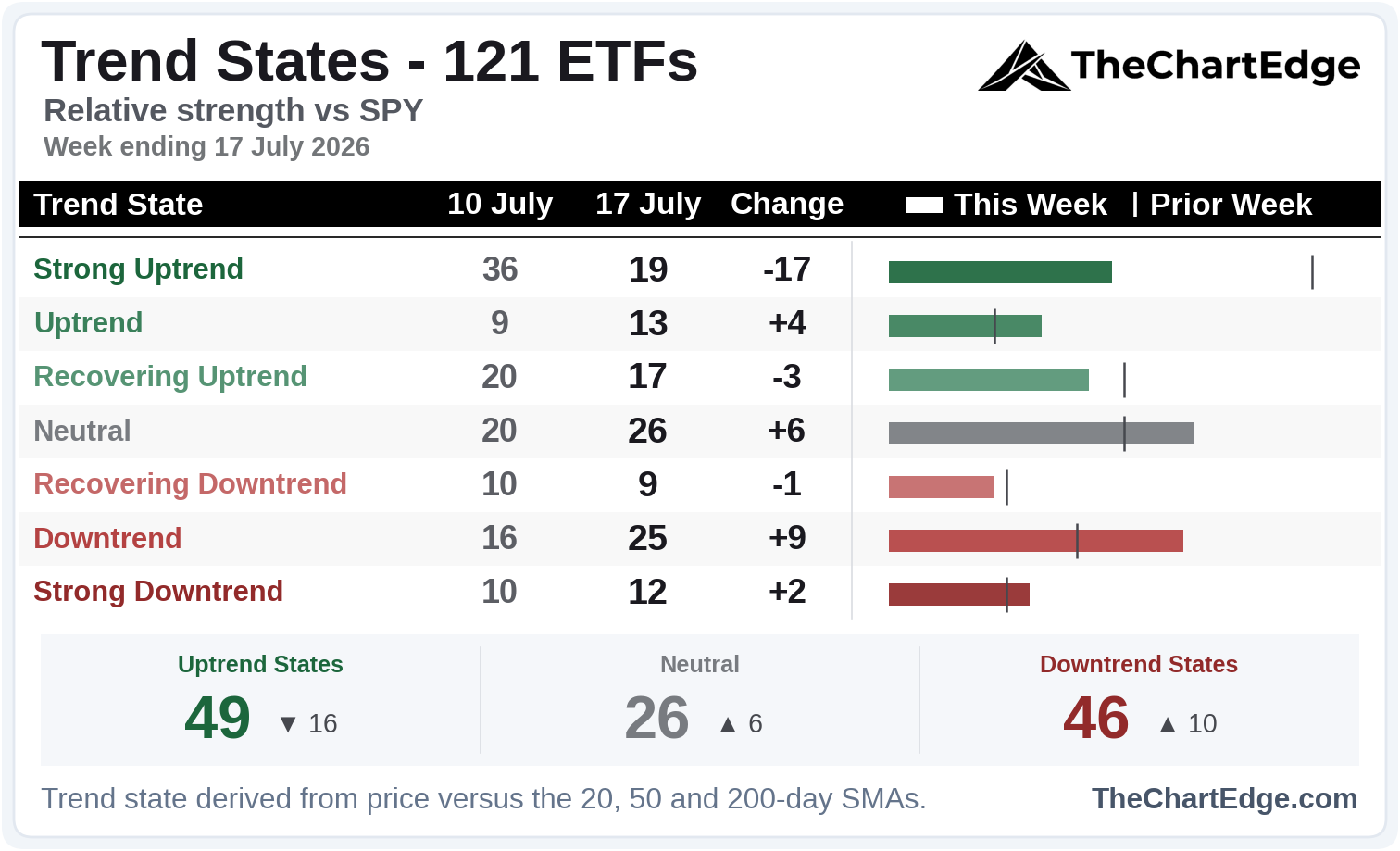
The number of ETFs in an uptrend state fell from 65 to 49 - nineteen dropped out and only three moved up into one.
Industry Breadth
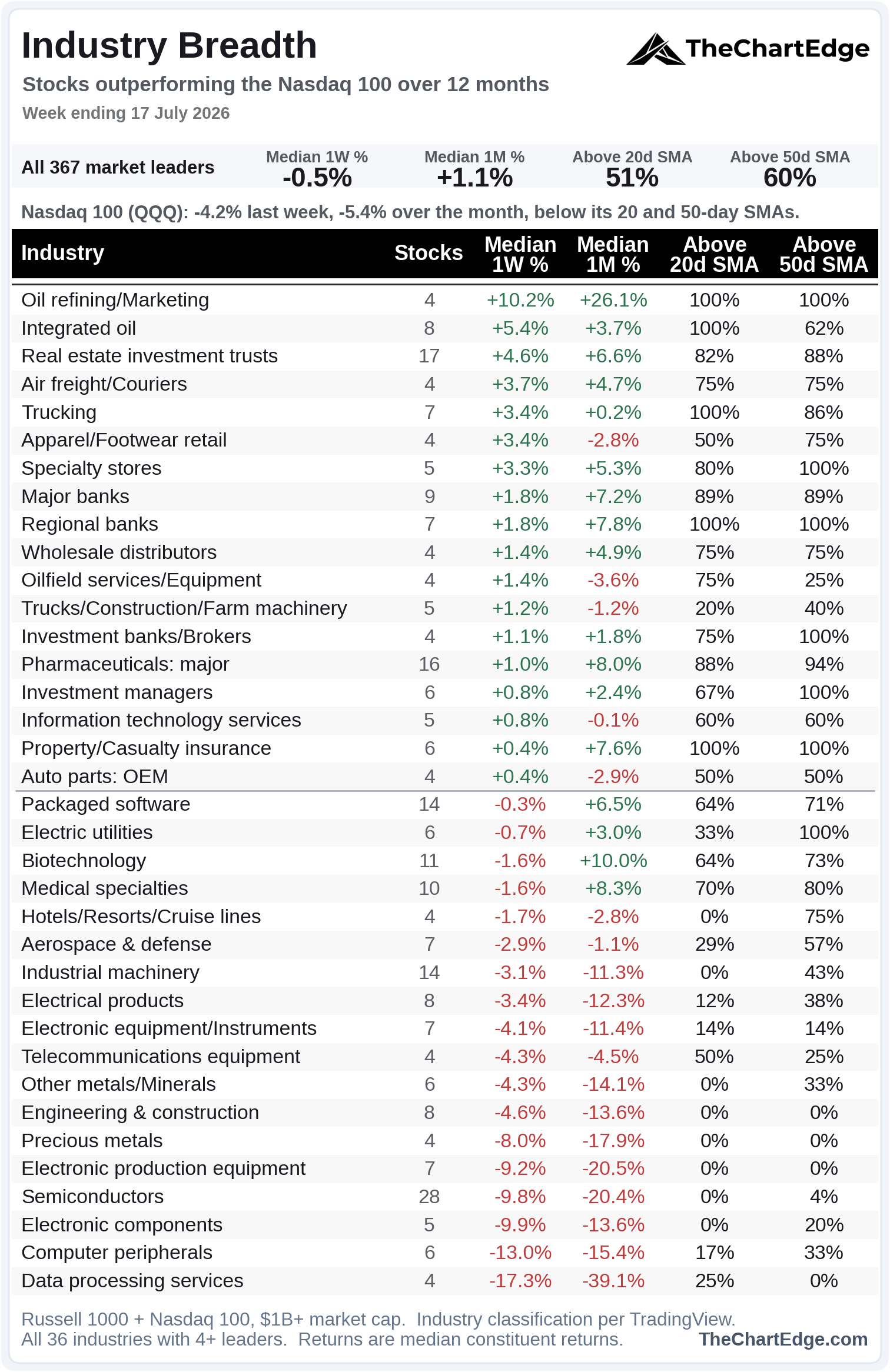
This new graphic takes every stock in the Russell 1000 and Nasdaq 100 that has outperformed the Nasdaq 100 over the past twelve months - 367 of them as of July 17 - groups them by industry and shows how the median stock in each group did and what percentage of the group are above their moving averages.
The five weakest industries are all AI and electronics related. Semiconductors, electronic components and electronic production equipment finished the week with not a single name above its 20-day SMA. At the other end, regional banks and property and casualty insurance have every name above both the 20 and 50-day, and major pharmaceuticals 88% and 94%.
Follow-Up on Last Week’s Names
Last weekend I mentioned Dell (DELL), AMD, Cisco (CSCO) and Astera Labs (ALAB) as names holding up relatively well. However, all four broke down last week, which is itself a warning.
ALAB Chart
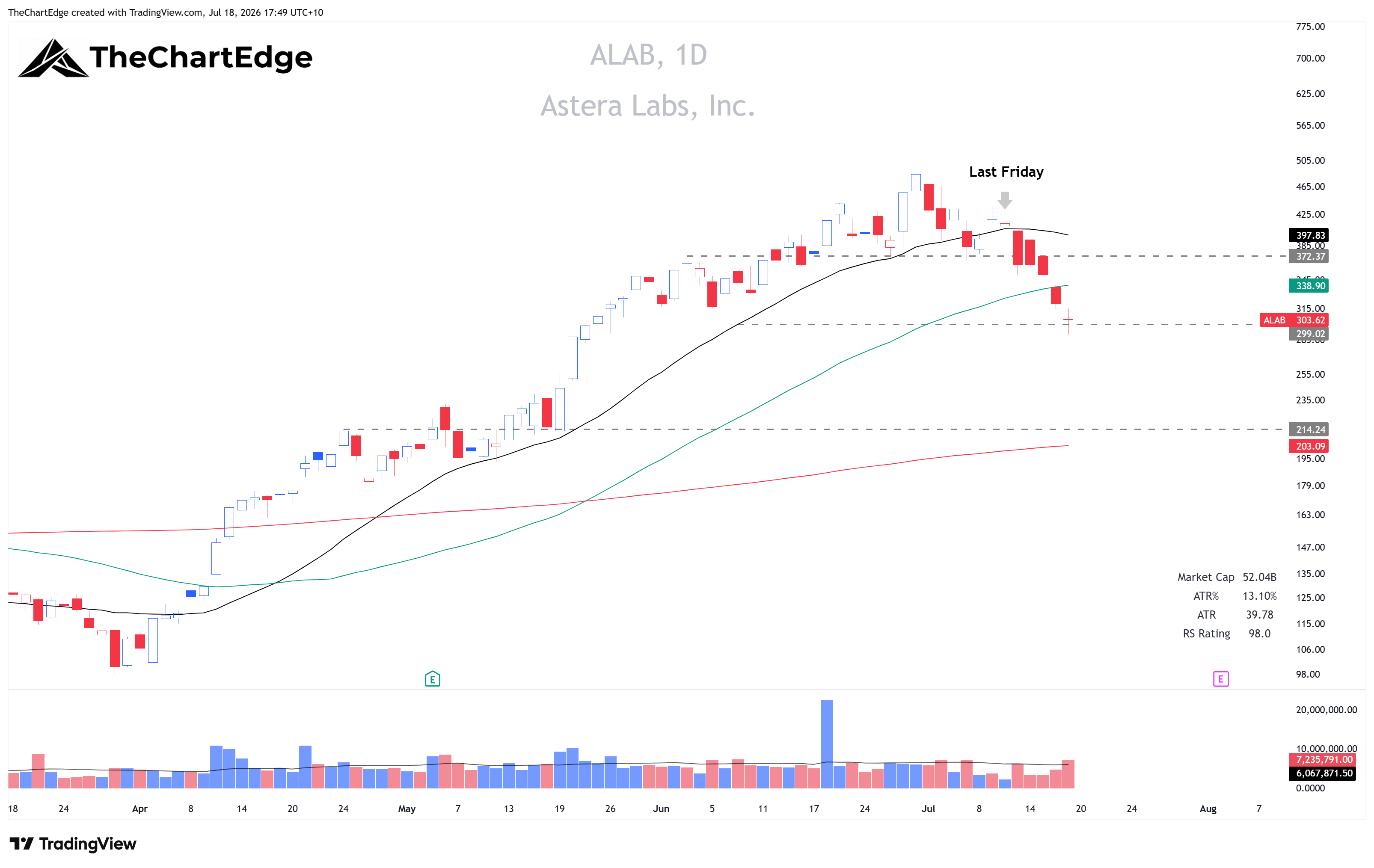
ALAB ended the week roughly 40% off its June 30 high and closed below its 20 and 50-day SMAs.
CSCO Chart
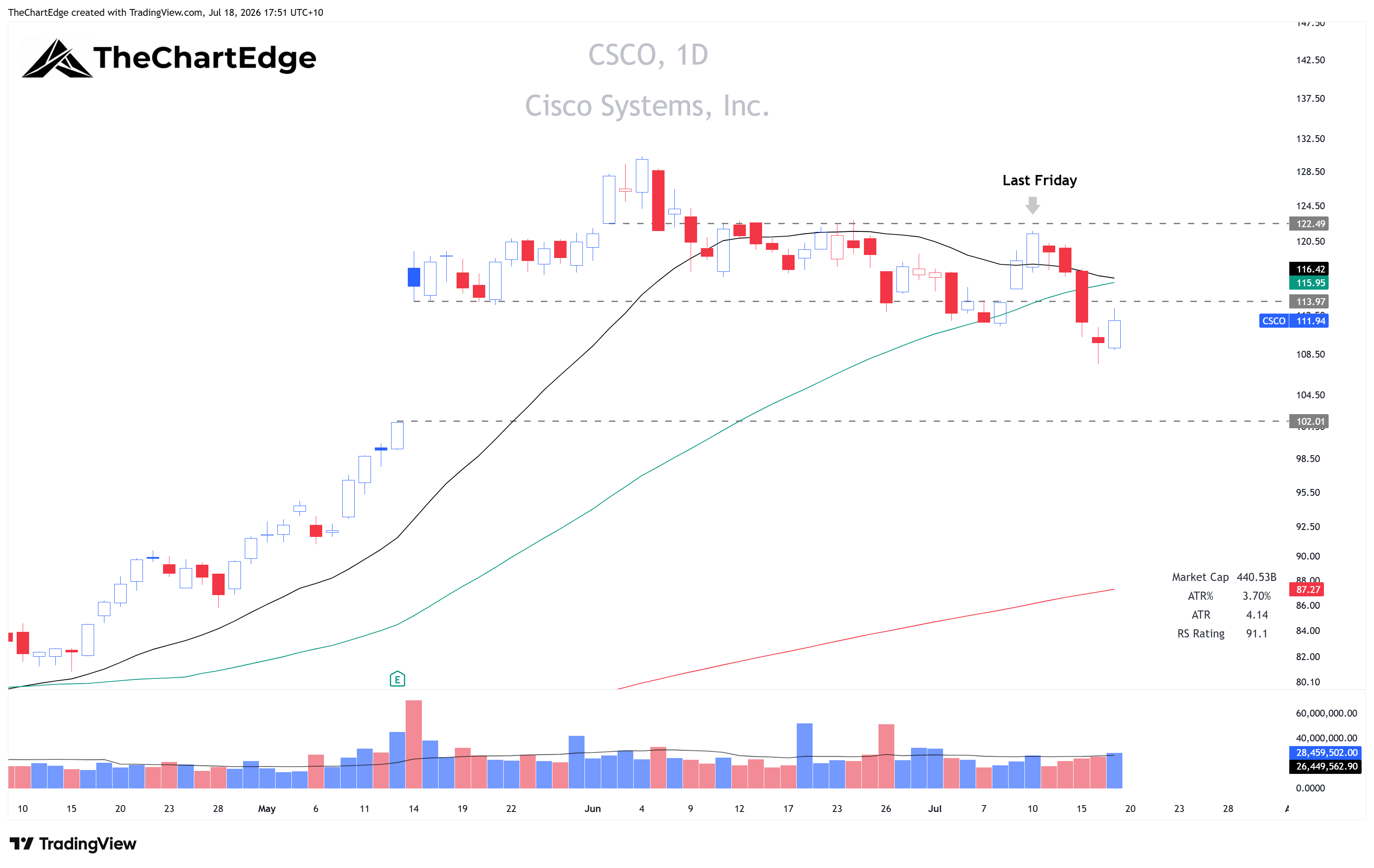
Cisco also closed below its 20 and 50-day SMAs.
AMD Chart
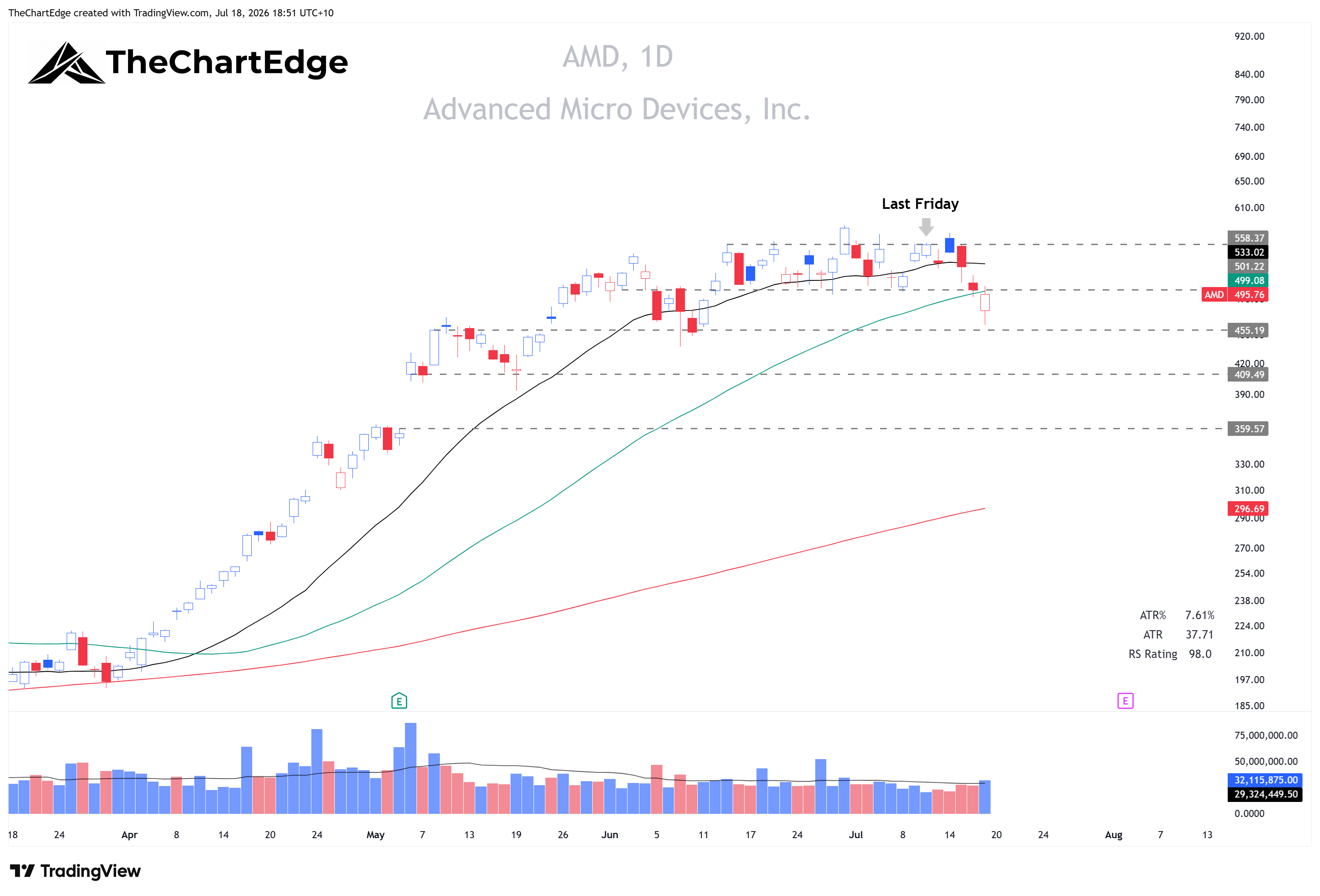
AMD lost its 20-day and closed just below its 50-day SMA.
DELL Chart
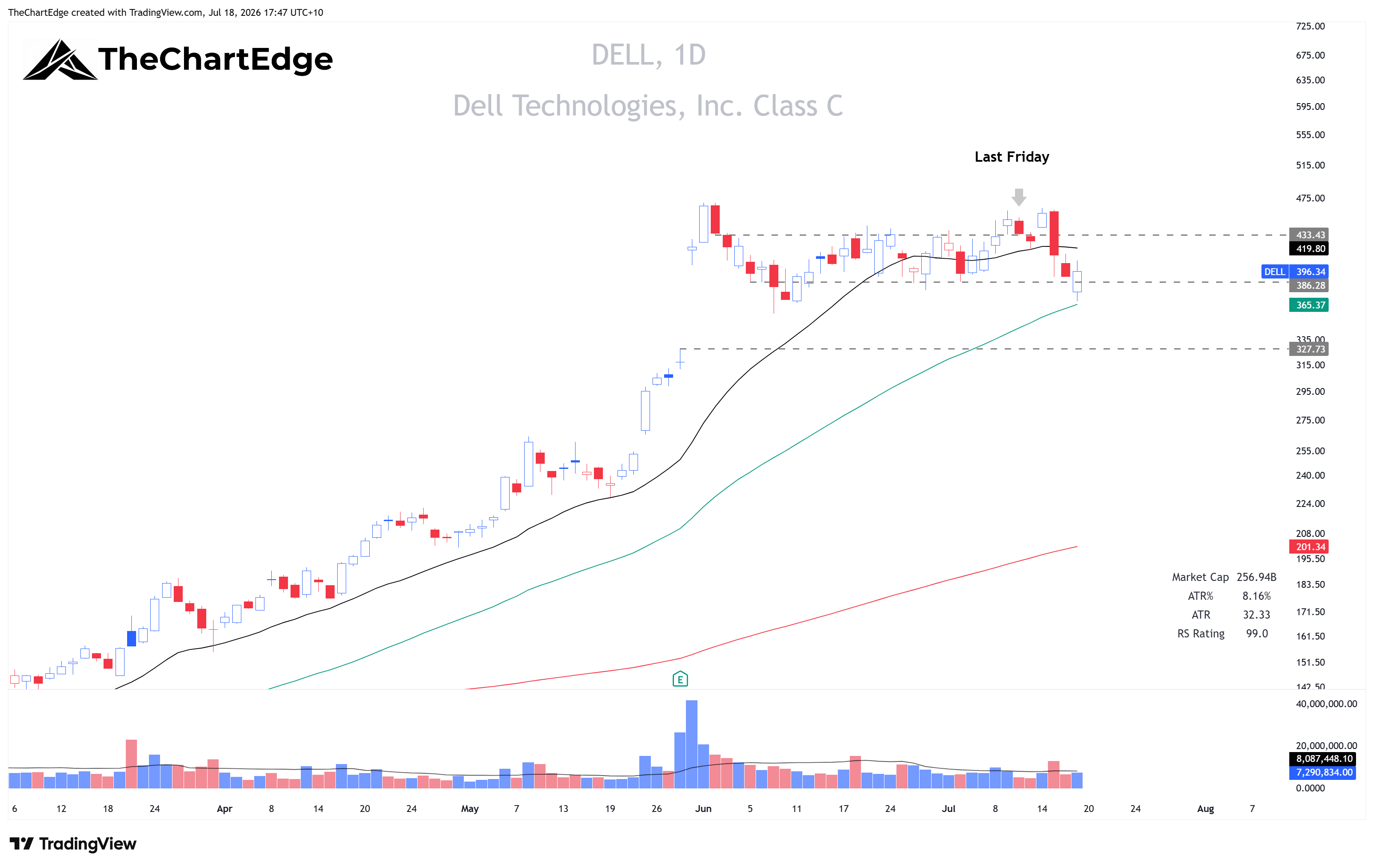
Dell held up better than the others - still holding its 50-day SMA.
The Week Ahead
The temperature is back in Cautious, and while one week here is close to a coin-flip historically, the absence of a short-term trend in SPY and QQQ tells me to be patient. Last week I didn’t put on any new swing positions - all I did was day trades, mostly shorts on Thursday and Friday.
Stay open-minded and manage risk carefully.
Cheers,
Marcus Grant, CFTe
Disclaimer: The content provided in this newsletter is for informational and educational purposes only and should not be considered as financial, investment, or legal advice. The information shared is based on our research and analysis, but we are not a licensed financial advisor, nor can we guarantee its accuracy, completeness, or timeliness. Market conditions and financial instruments can change rapidly, and any opinions expressed may not be suitable for all investors. Any opinions expressed and or securities mentioned do not constitute a recommendation to buy, sell, or hold that or any other security. You should conduct your own due diligence and consult with a licensed financial advisor or other professional before making any investment decisions. Past performance is not indicative of future results, and all investments carry the risk of loss. The authors and publishers of this newsletter are not responsible for any financial decisions made based on the content provided herein. By reading and or subscribing to this newsletter, you acknowledge and agree that you are using the information at your own risk.